
A36 Steel: A Standard American Structural Carbon Steel
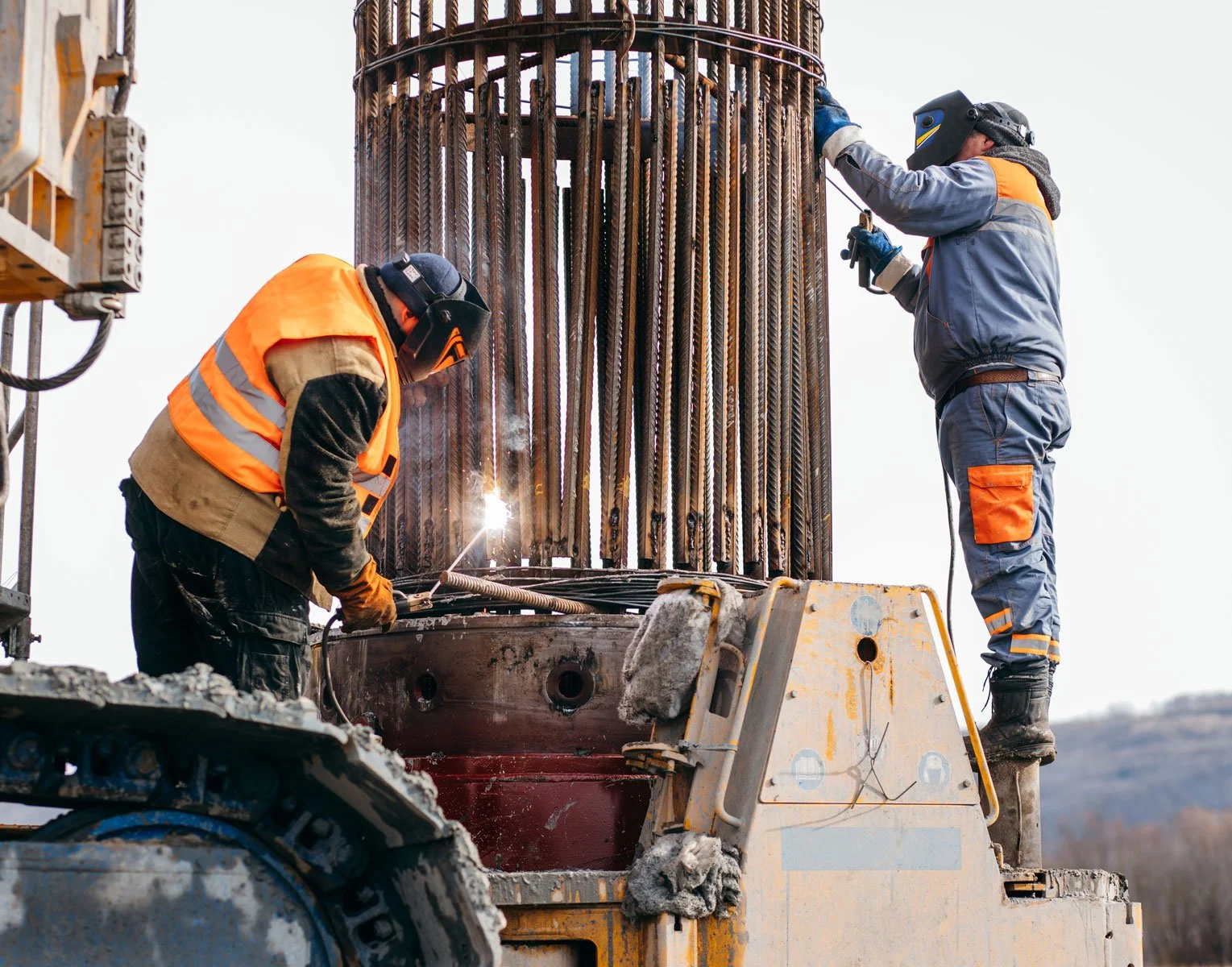
Whether they realize it or not, Americans live and work in structures built with A36 steel. From bridges and commercial buildings to industrial facilities and infrastructure projects, ASTM A36 is one of the most widely specified structural carbon steels in the United States.
What is A36 steel, and what makes it such a consistent choice for structural and general fabrication applications?
In this guide, we examine A36 steel’s defining properties, its common uses, and what makes it so broadly useful in construction and beyond.
The information presented below is provided as a general instructional guide only and is not intended to be comprehensive or definitive. Please reach out to Jade Sterling Steel if you have questions about your steel project and its requirements.
What is A36 steel?
A36 steel is one of the most widely specified structural carbon steels in the United States. Classified under ASTM A36 (UNS K02600), this standard was originally introduced by ASTM International in 1960 and has been revised over time to reflect evolving industry requirements.
Often referred to simply as carbon steel A36, this grade is commonly selected for structural components due to its dependable mechanical properties and broad availability in bar, plate, and other structural forms.
From a manufacturing standpoint, A36 is produced using standard carbon steelmaking practices. Iron ore and carbon sources such as coal are melted in a furnace, impurities are removed, and alloying elements are introduced to achieve the required chemical composition.
Once refined, the molten steel is cast into ingots or continuously cast shapes. The material is typically hot rolled, meaning it is shaped to final dimensions at elevated temperatures using rolling mills.
A36 Steel Applications
A36 steel is known for its excellent weldability, as it can be joined using virtually all conventional welding processes. In structural applications, A36 components are also frequently connected using bolting or riveting techniques, further contributing to its versatility in fabrication and construction environments.
Because A36 steel properties are standardized and predictable, it is frequently used in load-bearing structural applications. Its mechanical profile makes it well-suited for projects that require an economical steel that can still offer dependable performance under static and dynamic loading conditions. A36 components, such as beams, supports, frames, and reinforcements, are commonly found in applications like:
Bridges
Commercial buildings
Warehouses
Industrial facilities
Heavy equipment frames
Energy infrastructure
A36 Steel Properties
Unlike many AISI-designated grades, such as 4140, ASTM A36 steel is not primarily defined by a strict chemical composition range. Instead, A36 is specified based on required mechanical performance.
In other words, while alloy steels like 4140 are categorized by their chemical makeup (including chromium and molybdenum content), ASTM A36 is defined by meeting minimum strength criteria. For a breakdown of alloy-based naming conventions, see our 4140 steel guide.
The defining requirement for A36 steel is its minimum yield strength of 36,000 psi. While the standard does include composition limits, the mechanical performance requirement is the controlling factor in classification.
A36 Steel Carbon Content
A36 is classified as a low-carbon steel, meaning it contains less than 0.30% carbon by weight. In practice, carbon content is typically limited to approximately 0.26%–0.29%, depending on product thickness and form.
A36 Steel Strength
The mechanical properties of A36 steel are standardized to support structural applications.
For plates, bars, and shapes under 8 inches (203 mm) thick:
Minimum yield strength: 36 ksi (36,000 psi / 250 MPa)
Ultimate tensile strength: 58–80 ksi (400–550 MPa)
For components thicker than 8 inches:
Minimum yield strength: 32 ksi (220 MPa)
Ultimate tensile strength: 58–80 ksi (400–550 MPa)
A36 Steel Hardness
Because A36 is a low-carbon structural steel, its hardness is moderate relative to alloy grades. Typical Brinell hardness values fall in a range consistent with its strength classification and hot-rolled condition.
Typical hardness values (hot-rolled condition):
Brinell Hardness (HB): approximately 119–162 HB
Rockwell B (HRB): approximately 67–83 HRB
A36 Steel Density
The density of A36 steel is approximately:
0.28 lb/in³
7.8 g/cm³
This density is consistent with most carbon steels and is commonly used in structural weight calculations and fabrication planning.
Learn More About Sourcing A36 Steel Bar for Your Next Project
Whether your application calls for A36 steel bar for structural fabrication, construction, or general manufacturing, Jade Sterling Steel is ready to support your project. Our team can help you identify the right size and specifications to meet your performance and supply requirements.
For over 55 years, Jade Sterling Steel has been one of the nation’s leading distributors of steel bar and wire rod. Our 40,000+ ton inventory spans a wide range of grades and dimensions, providing the flexibility manufacturers and fabricators need to keep projects on schedule. From just-in-time deliveries to long-term supply partnerships, we are committed to dependable material quality and nationwide availability.
Please contact our team to discuss your A36 steel needs or request a custom quote.